
20 Jan New and Affordable Preventive Digital Compliance at the Changing Station
From Tracking to Preventive Compliance
A Process-Oriented Quality Framework for Preclinical Animal Facilities
During the development of CageTalkers Assist, we systematically examined quasi-legal foundations for regulatory compliance.
Our goal was clear: we wanted to connect normative requirements with real operational control and audit-ready evidence.
Specifically, we aimed to identify robust and broadly accepted requirements for compliant operation in laboratory animal facilities.
To achieve this, we analyzed internationally recognized standards, accreditation programs, and professional guidelines side by side.
As a baseline, we applied ISO 9000 and ISO 9001 as the reference framework for quality management systems.
In parallel, we incorporated the OECD Principles of Good Laboratory Practice for preclinical research environments.
We then used the accreditation program of AAALAC International as a benchmark for programmatic and procedural quality.
Further guidance came from recommendations issued by the National Research Council and the ILAR/NRC framework.
A key reference was the FELASA Working Party Report published in 2004.
We complemented this with FELASA recommendations on training and health monitoring.
At the national level, we also included professional guidance and position papers from GV-SOLAS.
Taken together, these sources define consistent requirements for integrated quality, animal welfare, and compliance concepts.
Importantly, however, they deliberately avoid prescribing specific technological solutions.
This gap makes translation necessary.
Regulatory expectations must be converted into an operational quality assurance framework that works in daily practice.
For this reason, we designed a framework that explicitly links animal housing, changing stations, animal rooms, and documentation.
Rather than treating these elements separately, the framework connects them as one continuous process chain.
Objective of the Quality Assurance Framework
First and foremost, the framework aims to protect animal welfare under reproducible and controlled process conditions.
At the same time, it ensures that staff can demonstrably execute all husbandry activities according to defined standards.
In addition, the framework establishes a reliable audit trail to support inspections and audits.
Most importantly, it shifts quality assurance to the point of execution instead of relying on retrospective documentation.
Structure of the Framework
To support these objectives, we implemented a four-level structural model.
This model deliberately links expectations, execution, and evidence.
Levels A through D remain functionally distinct, yet they interact through clearly defined interfaces.
Each level answers a specific question, while supporting the others.
Level A – Normative Framework
Level A explains why quality and compliance are required in laboratory animal facilities.
It defines expectations, but it does not dictate specific workflows.
The main reference domains include:
- FELASA, defining training requirements, health monitoring standards, and facility criteria
- GV-SOLAS, providing nationally contextualized guidance and SOP-oriented requirements
- AAALAC International, evaluating programmatic and procedural quality for accreditation
- EU Directive 2010/63/EU and national legislation, defining legal minimum requirements
The outcome of this level is a consolidated and auditable requirement catalogue.
This catalogue provides the stable baseline for all subsequent process definitions.
Level B – Process Definition
Level B clarifies what constitutes standardized core processes for animal care personnel.
We organize these processes into a clear and consistent SOP landscape.
Typical examples include:
- Cage changing, covering animal assignment, sequence control, hygiene, and cage inspection
- Cage checks, focusing on completeness and regularity
- Feeding and watering, ensuring correct feed type, batch traceability, and allocation
- Treatments and applications, requiring correct animal identity and dosage accuracy
- Animal movements, demanding project assignment, authorization, and traceability
Across all processes, documentation must remain timely, accurate, and complete.
This structure creates a one-to-one relationship between processes and SOPs.
As a result, normative expectations become operationally manageable.
Level C – Execution and Preventive Safeguards
Level C addresses how teams ensure quality during execution in the animal room.
Here, quality assurance becomes an active process, not an afterthought.
We apply classical quality instruments such as SOP training and competence verification.
For critical steps, we additionally use the four-eyes principle.
When deviations occur, teams handle them through structured deviation management and CAPA procedures.
However, we do not stop at correction alone.
In parallel, we introduce preventive instruments that actively reduce error probability:
- Dialog-guided workflows at the changing station
- Scan or read confirmations for cages, animals, and materials
- Enforced process sequences that prevent step omission
- Mandatory fields and plausibility checks with immediate feedback
These mechanisms stop errors before documentation becomes necessary.
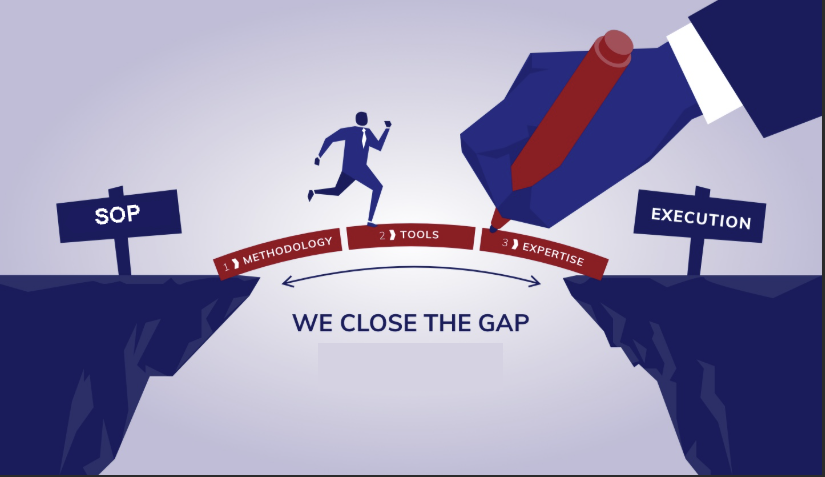
In this way, the framework closes the gap between written SOPs and real execution.
Level D – Evidence and Continuous Improvement
Level D focuses on how organizations measure, document, and improve quality performance.
Key elements include:
- Audit trails that record who performed which action, when, and where
- Contextual process data linked directly to each transaction
- Periodic evaluation of key performance indicators and deviations
- Demonstrated training compliance through individual training records and self-inspections
- SOP conformity checks via reviews, sampling, and scheduled evaluations
- Monthly and quarterly reports for management and regulatory authorities
Together, these elements create regulatory and audit security.
At the same time, they embed continuous improvement into everyday operations.
Limitations of Pure Tracking Approaches
Many facilities initially introduce animal management systems to meet regulatory requirements.
These systems document animals, movements, services, and findings.
In practice, however, they mainly support retrospective tracking.
Tracking ensures traceability, but it does not prevent execution errors.
This limitation becomes especially visible at the changing station.
Parallel Documentation and Structural Barriers
For this reason, many stakeholders advocate parallel documentation during execution.
In reality, cleanroom conditions make this difficult.
Staff work in sterile clothing after airlock procedures.
At the same time, many AMS interfaces rely on table-based designs that require high attention.
As a result, data entry competes directly with animal handling and hygiene tasks.
In addition, facilities rarely treat animal rooms as true production environments.
In industrial settings, organizations separate production and administration but tightly couple both systems.
Preclinical research environments often lack this systematic coupling.
Although AMS systems provide outbound interfaces, reverse data integration remains limited.
Pre-Registration and Confirmation as a Pragmatic Approach
Under these constraints, pre-registration offers a practical solution.
Teams plan and structure transactions in advance within the Animal Management System.
They then execute these transactions under optimal hygienic conditions in the animal room.
Instead of documenting from scratch, they simply confirm pre-registered actions.
This approach decouples data entry from execution in both space and time.
At the same time, it preserves process control and auditability.
Feasibility Enabled by Digital Cage Cards
Paper-based cage cards cannot reliably support this approach.
Digital cage cards, however, make it practical.
Teams generate cage cards independently of the data entry location.
After storage in the AMS, the system transfers the data to a web service.
The service generates customer-specific layouts and sends image content to electronic labels.
Alongside projected inventory data, the labels display planned movements and services.
These planned actions appear, for example, as watermarks on the digital cage card.
Staff immediately see which cages are affected and which actions are required.
Holder position or LED flashing can further support identification.
As a result, execution proceeds without interruption by data entry tasks.
When quality assurance requires confirmation, staff perform simple, dialog-guided scans.
Alternatively, the system automatically removes watermarks at the end of the shift.
This flexibility allows teams to balance maximum assurance with minimal interaction.
Hardware Options and Evaluation Criteria
Facilities can implement the infrastructure using infrared or radio-based technologies.
Both options rely on sensor-equipped labels and appropriate room infrastructure.
Key evaluation criteria include:
- Battery lifetime
- Amortization period
- Inventory capability
- Transmission robustness in metallic environments
- Coexistence with other radio systems
Facilities must assess potential animal exposure to signal emissions in a context-specific manner.
Such assessments should always rely on evidence and facility-specific conditions.
Ergonomics as a Critical Success Factor
Ergonomics becomes especially important when confirmation-based quality assurance is applied.
Automatic deletion modes eliminate the need for additional user interaction.
Corrections become necessary only when actual inventory deviates from pre-registration.
Even dialog-guided confirmation cannot fully eliminate such cases.
Ideally, systems identify cages without handheld scanners through surface-based recognition.
If teams use scanners, screens, keyboards, or mice, they must ensure ISO 9241 compliance.
ISO 9241 defines ergonomic requirements for human–system interaction.
Compliance reduces cognitive load and systematically lowers error probability.
Conclusion
Digital cage cards combined with pre-registered transactions enable preventive quality assurance.
This approach meets regulatory expectations while preserving efficiency in daily animal room operations.