

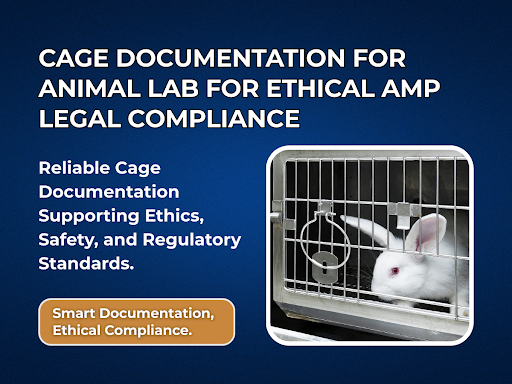
17 Dec Cage Documentation for Animal Lab for Ethical& Legal Compliance
Ethical responsibility and compliance with legislation are basic principles in animal research.
Animal labs must be transparent, accurate, and accountable in all aspects of animal handling
and research. Among the most important elements in ensuring these principles are adhered to
is accurate cage labelling in animal lab settings.
To promote the welfare of animals and ensure they are kept in accordance with rules and
regulations and with scientific accuracy, adequate records must be maintained. With increasing
complexities in record-keeping formats, technology such as “Cage Talker’s is now assisting
animal laboratories in fulfilling these requirements.
Why Ethical and Legal Compliance in Animal Laboratories?
Animal research facilities operate under rigorous ethical guidelines designed to balance animal
welfare with scientific progress. The governing bodies demand proper documentation to confirm
the humane treatment of animals and the proper implementation of research methods.
Well-documented cage information in animal lab environments promotes the following:
● Ethical treatment of animals
● animal ethics
● Complying with approved research protocols
● Legal protection for institutions
● Protecting institutions
● Transparent & auditable records
● Trust with regulators, sponsors, and the public
Incorrect lab work can not only affect human lives in medical situations when lab results are
used to make important decisions, but it can also have repercussions in a
Importance of Cage Documentation in Humane Animal Handling
Cage documentation is an important
A cage card is a reflection of an animal’s life circumstances, state of health, and participation in
research. Good animal ethics requires accurate records, which include information on relevant
matters such as:
● Animal identification and species information
● Housing conditions and environmental factors
● Observations and veterinary care in health
● Breeding, Mating, and Weaning History
● Special handling requirements
Well-maintained cage records in animal research laboratories help in taking proper care of
animals according to their requirements, thus reinforcing positive ethics in research.
Legal Requirements for Cage Documentation
As stated repeatedly, animal laboratories operate under a variety of national and international
regulations. Cage documentation is a direct part of ensuring these standards are met, including:
Institutional and Regulatory Supervision
The regulatory bodies demand evidence of conformity with approved animal care protocols and
standards.
Good Laboratory Practice (GLP)
GLP requires accurate, verifiable, and traceable record-keeping for all research activities,
including animal husbandry.
Audit and Inspection Readiness
Inspectors make extensive use of cage-level records during audits in order to establish
compliance with statutory requirements.
The cage inventory in animal lab facilities serves as a legally binding document protecting
institutions during inspections.
Traditional record-keeping methods in a cage have many
disadvantages.
The majority of laboratories today maintain either written cage cards or spreadsheets, which
face a series of challenges, such as:
● Poor penmanship and incomplete statistics
● Small space to record information
● Updated
● Difficulty in tracking historical changes
● Higher chance of non-compliance
Such conditions make it a challenge to abide by both moral and legal requirements, especially
in major institutions.
How Cage Talker’s Complies with Ethical & Legal Standards
Technology, such as in Cage Talker’s is revolutionizing cage documentation in laboratories.
Through digital and automated cage documentation, Cage Talker’s ensures accurate cage
documentation in animal lab settings.
- Real-Time Digital Updates
Any changes in animal status, treatment, or animal housing will be immediately updated and
reflected. Such updates will impact decisions on the ethical treatment of animals. - Multi-Page Electronic Cage Cards
With Cage Talker’s, information can be presented in-depth on various digital pages, which
removes space restrictions and hence enhances information detail. - Automated Alerts and Task Reminders
Timely actions are necessary in ethics and law. The staff receive notifications when a cage
change, treatment, or welfare check is due. - Complete Traceability & Audit Trails
Every update is time-stamped and user-verified, providing a transparent audit trail ideal for legal
checks and audits.
- Reduced Human Error
As a way of eliminating human error when creating documents, Cage Talkers greatly minimizes
paperwork errors.
Advantages of Digital Cage Documentation for Compliance
Improving cage documentation to support animal lab operations using cage Tlakers offers
several benefits:
● Strengthening animal welfare through accurate animal records
● Enhanced ethical accountability
● Enhance Legal Compliance and Audit Readiness
● Improved staff efficiency and workflow
● Secure and centralized data storage
The digital documentation systems in the lab foster a culture of accountability and accuracy.
Conclusion: Build Trust Through Ethical and Legal Compliance
Ethical obligations and legally mandated performance standards have no room for negotiation in
animal research. Record keeping for animal lab operations will ensure animals are handled
humanely, and research standards are adhered to.
Through innovative digital solutions such as those offered by Cage Talker, laboratories can
transform their documentation methods, make them more transparent, and be confident in
adhering to ethics and laws. Smarter cage documentation investments go beyond mere ethics
and laws; they represent enhanced trust, integrity, and excellence in animal research.